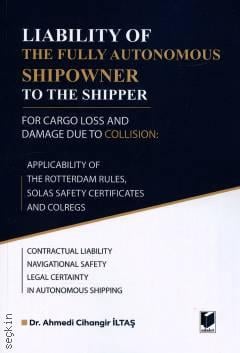
Liability of the Fully Autonomous Shipowner to the Shipper
1. Baskı,
Ağustos 2026
Kitabın Detayları
Dili:
İngilizce
Ebat:
16x24
Sayfa Sayısı:
307
Kitabın Fiyatı:
770,00₺
Temin süresi 2-3 gündür.
Kitabın Açıklaması
The principal research question of this thesis focuses on the liability of the fully autonomous shipowner towards the shipper for damage to cargo resulting from a collision on the high seas. In addressing this question, it is essential to examine the legal issues that directly influence the liability regime, namely the seaworthiness of the ship and the conduct of navigation in accordance with collision-avoidance standards. For this reason, the second research question considers whether fully autonomous ships are seaworthy, taking into account both the technologies on board and the systems located in the remote operation centre. The third research question focuses on the legal rules governing collision avoidance and prevention in fully autonomous navigation, as well as the extent of the shipowner's duty of due diligence in ensuring compliance with these rules.
By addressing these three central research questions, this thesis aims to contribute to the broader discourse on maritime law and fully autonomous shipping, providing valuable insights into the legal challenges, liability regime and implications associated with the emergence of fully autonomous cargo ships.
Kitabın Konu Başlıkları

İntroduction
Legal Examination of Autonomous Ships: Autonomous Ship Definition and Classification, Freedom of Navigation Under Unclos
Safety Certificates of Fully Autonomous Ships Under Solas: A Regulatory Perspective for Technological Competence of Fully Autonomous Systems
Compliance of Fully Autonomous Ships With Colregs:uating Collision Avoidance and Colregs–Compliant Navigation
Liability of Fully Autonomous Shipowner to Shipper for Damages and Loss to Transported Goods Due to Collision Under The Rotterdam
Kitapla İlgili Kategoriler
Kitabın İçindekileri
CONTENTS
1. INTRODUCTION
13
A. RESEARCH QUESTION
14
B. AIMS AND OBJECTIVES
14
C. SIGNIFICANCE OF THE RESEARCH
16
D. STRUCTURE OF THESIS
17
E. RESEARCH CONTEXT
19
F. METHODOLOGY
33
2. LEGAL EXAMINATION OF AUTONOMOUS SHIPS: AUTONOMOUS SHIP
DEFINITION AND CLASSIFICATION, FREEDOM OF
NAVIGATION UNDER UNCLOS
39
A. AUTONOMOUS SHIP DEFINITION AND CLASSIFICATION OF
AUTONOMOUS SHIPS ACCORDING TO HUMAN INVOLVEMENT
AND DEGREE OF AUTONOMY
40
i. Ship Definition and Autonomous Ships
42
ii. Overview of The Regulatory Scoping Exercise and
Autonomous Ships Related IMO Circulars until May 2023
44
iii. The Classification of Autonomous Ships Based on Autonomy
Level and Manning
56
B. FREEDOM OF NAVIGATION FOR FULLY AUTONOMOUS SHIPS
WITHIN THE SCOPE OF UNCLOS
63
i. Nationality of Fully Autonomous Ships and the Genuine Link
Concept
64
ii. Freedom of Navigation of Fully Autonomous Ships at High
Seas and Exclusive Economic Zones under UNCLOS
69
iii. Safe Manning Challenges for Fully Autonomous Shipping
74
iv. Adaptability of UNCLOS and Possible Revisions for Fully
Autonomous Ships
79
3. SAFETY CERTIFICATES OF FULLY AUTONOMOUS SHIPS
UNDER SOLAS: A REGULATORY PERSPECTIVE FOR
TECHNOLOGICAL COMPETENCE OF FULLY
AUTONOMOUS SYSTEMS
83
A. ROLE OF SEAWORTHINESS IN LIABILITY REGIME AND NON–
COMPLIANCE WITH SEAWORTHINESS OBLIGATION
85
B. LEGAL CONSIDERATION OF ADVANCED NAVIGATIONAL
TECHNOLOGIES IN FULLY AUTONOMOUS SHIPS AND
EFFECTIVENESS OF EXISTING SOLAS REGULATIONS
92
i. Technical Adequacy of Fully Autonomous Cargo Ships for
Voyages: Ship Safety Certificates under SOLAS
93
ii. Safety Certificates for Remote Operation (Control) Centres:
Communication, Data Transfer and Steering Gear
Equipment
104
C. CONCLUSION
118
4. COMPLIANCE OF FULLY AUTONOMOUS SHIPS WITH COLREGS:
EVALUATING COLLISION AVOIDANCE AND COLREGS–
COMPLIANT NAVIGATION
123
A. DEFINITION OF COLLISION
124
B. LEGAL EXAMINATION OF COLREGS FOR FULLY AUTONOMOUS
SHIPS NAVIGATION: NAVIGATIONAL RULES AND
CHALLENGES
125
i. Importance of Voyage Planning for Fully Autonomous Ships’
Operations and Collision Prevention
126
ii. The Application of COLREGS to Fully Autonomous Ships:
Bridging Traditional Rules and Innovation
130
iii. Marine Casualty and Incident Reporting: Way Forward to
Adapt COLREGS
146
C. CERTIFICATE CHALLENGES FOR FULLY AUTONOMOUS
SHIPS CREW AND LIABILITY REGIME
149
D. CONCLUSION
156
5. LIABILITY OF FULLY AUTONOMOUS SHIPOWNER TO SHIPPER FOR
DAMAGES AND LOSS TO TRANSPORTED GOODS
DUE TO COLLISION UNDER THE ROTTERDAM RULES
161
A. INTRODUCTORY OVERVIEW OF THE ROTTERDAM RULES
163
B. DISCUSSION ON THE APPLICABILITY OF THE
ROTTERDAM RULES TO SOFTWARE
MANUFACTURERS AND REMOTE CREW
165
C. ANALYSING THE LIABILITY REGIME FOR FULLY
AUTONOMOUS SHIPS: ADDRESSING THE CARGO
LIABILITY IN COLLISION
177
i. StrictFault Liability of Shipowner for Collision: Legal
Scholars’ Approaches
177
ii. Scope of Liability and Burden of Proof Under the
Rotterdam Rules
187
iii. Partial Liability in Fully Autonomous Ships Collision: Act of
God, Inevitable Accident, Latent Defects and Agony of the
Moment
197
D. SCOPE OF SHIPPER’S OBLIGATION AND SOFTWARE
MANUFACTURER’S DUTY TO UPDATE
AUTONOMOUS SYSTEMS
215
i. Shipper’s Obligation and Relief of Liability for the Carrier
216
ii. Fully Autonomous Shipbuilding: Software Maintenance and
Due Diligence for Seaworthiness
227
E. COMPENSATION
234
F. CONCLUSION
237
6. CONCLUSION
243
BIBLIOGRAPHY
253
Kitabın Fiyatı:
770,00₺
Temin süresi 2-3 gündür.
Bu kitaplar da ilginizi çekebilir

Deniz Yoluyla Eşya Taşımada Sürastarya
İdris Kara
Karayolu ile Uluslararası Eşya Taşıma Hukuku
Engin Erdil
Türk Tarihinde Taşımacılık
Ercan Akyiğit
Demiryoluyla Eşya Taşımacılığından Kaynaklanan Hukuki Sorumluluk
Barış Kaya
Hakkımızda
|
Uluslararası Yayınevi Belgesi|
Kaynakça Dosyası|
Kişisel Verilerin Korunması |
Üyelik|
Siparişlerim|
İade Politikası|
İletişim