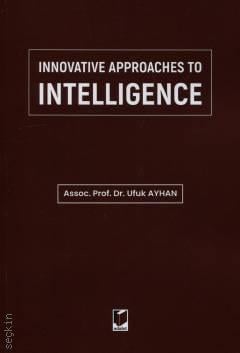
Innovative Approaches to Intelligence
1. Baskı,
Nisan 2026
Kitabın Detayları
Dili:
İngilizce
Ebat:
16x24
Sayfa Sayısı:
230
Kitabın Fiyatı:
610,00₺
Temin süresi 2-3 gündür.
Kitabın Açıklaması
The rapid technological transformation of the 21st century is fundamentally reshaping the intelligence discipline. In the Information Age, the traditional intelligence paradigm has given way to a techno-political approach; concepts such as artificial intelligence, big data, hybrid cognition, and strategic wisdom have become the cornerstones of national security. Under the title "Innovative Approaches to Intelligence," this book examines the evolution of intelligence as an art, science, and industrial process by addressing this transformation through its ontological and epistemological dimensions. This work, which I have edited, aims to offer new approaches to decision-makers and intelligence researchers by blending academic rigor with practical applications.
The initial chapters of the bookuate the dialectical relationship between knowledge and power from a historical perspective, bringing the lineage extending from Sun Tzu to Sherman Kent into today's techno-political context. By examining theoretical foundations such as system theory, bounded rationality, and decision theories, it emphasizes the role of intelligence within open systems. Innovative concepts such as the integration of artificial intelligence into military intelligence, mixed cognition models, and synthetic geopolitics form the core of the book. Human capital management, the DIKW hierarchy, and methodological recommendations for psychological intelligence activities provide the reader with concrete tools. In particular, the psychological operationsuation model in the eighth chapter offers an innovative contribution to the field by suggesting the hybrid use of qualitative and quantitative methods.
This study describes a world where intelligence goes beyond data collection and becomes a process of producing strategic wisdom. In an age of uncertainty, a world where technology becomes an actor, ethical reasoning and human values are indispensable. Prepared in a way that will also shed light on Türkiye's national security strategies, the book aims to be a guide for academics and decisionmakers. We hope that this work provokes new questions and serves as a source of inspiration in shaping the future of intelligence.
Kitapla İlgili Kategoriler
Kitabın İçindekileri
İçindekiler
Preface
5
◼ CHAPTER ONE – RECONSTRUCTING INTELLIGENCE IN THE
INFORMATION AGE: TECHNO–POLITICAL PARADIGM,
HYBRID COGNITION, AND STRATEGIC WISDOM
9
Assoc. Prof. Dr. Ufuk AYHAN
◼ CHAPTER TWO – A HOLISTIC APPROACH TO STRATEGIC
INTELLIGENCE
39
Assoc. Prof. Dr. Ufuk AYHAN
Dr. Ali KÖSE
◼ CHAPTER THREE – THE TRANSFORMATION OF HUMAN
INTELLIGENCE IN THE DIGITAL AGE
67
Dr. Özlem ACAR
Assoc. Prof. Dr. Murat TINAS
◼ CHAPTER FOUR – ARTIFICIAL INTELLIGENCE STRATEGIES IN
MILITARY INTELLIGENCE: AN EPISTEMOLOGICAL AND
OPERATIONAL ANALYSIS
89
Dr. Yavuz TÜRKGENCİ
◼ CHAPTER FIVE – INTELLIGENCE ANALYSIS IN THE
TECHNO–POLITICAL CONTEXT: AN ONTOLOGICAL AND
EPISTEMOLOGICAL APPROACH
119
Dr. Alp Cenk ARSLAN
8 İçindekiler
◼ CHAPTER SIX – HUMAN INTELLIGENCE IN THE CONTEXT OF HUMAN
CAPITAL IN THE NEW GLOBAL SECURITY CONCEPT
149
Dr. Onur AĞIRDİL
◼ CHAPTER SEVEN – THE RELATIONSHIP BETWEEN KNOWLEDGE
AND INTELLIGENCE IN THE CONTEXT OF THE KNOWLEDGE
HIERARCHY
181
Zeki Can SAROĞLU
Zeynep Melike SAROĞLU
◼ CHAPTER EIGHT – MEASURING INFLUENCE IN PSYCHOLOGICAL
INTELLIGENCE ACTIVITIES: A METHODOLOGICAL PROPOSAL
207
Doğukan TUNCAL
Kitabın Fiyatı:
610,00₺
Temin süresi 2-3 gündür.
Bu kitaplar da ilginizi çekebilir

Kripto Varlıkların Anonim Şirkete Sermaye Olarak Getirilmesi
Anıl Ercan
Bilişim Hukuku: Güncel Sorunlar VII
Süleyman Yılmaz
Tıpta Yapay Zeka Kullanımından Kaynaklanan Hukuki Sorumluluk
Serenay Ağın
Açıklanabilir Yapay Zeka için
Blok Zincir Teknolojisi ve Yasal Zorluklar
Güner Demirel
Hakkımızda
|
Uluslararası Yayınevi Belgesi|
Kaynakça Dosyası|
Kişisel Verilerin Korunması |
Üyelik|
Siparişlerim|
İade Politikası|
İletişim